
Season 1 · Technical Qualities · MasterClass #2 · Featuring Peter Stokkebroe
The Art of Timing: How Technical Mastery Becomes Freedom in Latin Dance
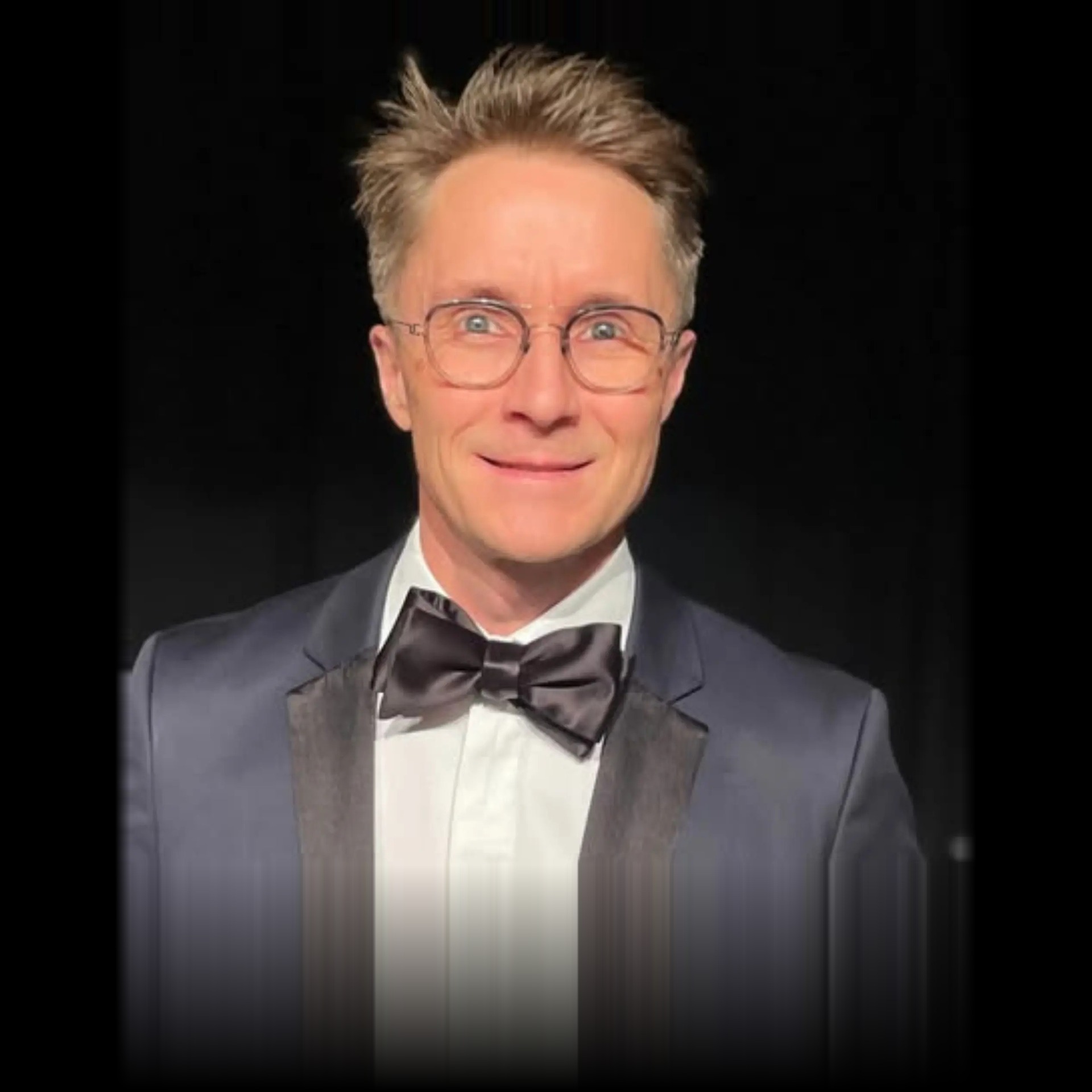
What does it take for a Latin dancer to break free from choreography, to transcend mere repetition, and illuminate the floor with originality? In MasterClass #2, Peter Stokkebroe, World and European Champion, teacher, and organizer, delivered much more than a lecture on technical qualities. Over two immersive hours, guided by Holger Nitsche and Jean Dorff, a profound exploration unfolded: not only about how to build better dancers, but about how to rediscover the very joy of dancing itself.
The Foundation That Breathes
From Holger Nitsche’s heartfelt introduction, it was clear: this wasn’t a MasterClass about steps or memory. It was about the heartbeat beneath the surface. Peter Stokkebroe immediately set the tone: champions are not simply produced by routines drilled into perfection, but through an ecosystem of teaching, curiosity, and an openness that spans generations.
With characteristic candor, Peter Stokkebroe paid homage to the teachers and mentors who shaped him, tracing his Danish roots back to Colin, Allene, Espen, and Hans, and ultimately to the technical lineage of Walter Laird. But rather than fostering clones, he argued, true mastery leaves room for “the personal style to emerge”, a uniquely lived process, only possible when the foundational technique is robust enough to support creativity.
Beyond the Visual: The Trap of Imitation
A theme rang out with urgent clarity: today’s dancers, living in an age of social media and YouTube, are more often shaped by what looks good, rather than what feels right. Peter challenged both teachers and students to resist this “start-stop” obsession with effects, the endless pursuit of accent-hitting, the mimicking of others’ mannerisms. Instead, he urged a return to function, sensation, and the timing of weight: “If I time my weight, there is endless power,” he declared.
Drawing a striking comparison to the world of breaking (breakdance), Peter illuminated how creativity can be systematically squeezed out by over-choreographing and over-rehearsed patterns: in breaking, repeating a combination twice can get you disqualified. In dance sport, however, the same routines persist for years, a habit that kills the art in pursuit of the effect.
Timing, Transition & The Wokatike Mantra
At the technical heart of the session was Peter Stokkebroe’s signature focus on the mechanics of time. Whether dissecting samba walks or cha-cha locksteps, he revealed that world-class quality lies not in force, nor in arrival, but in the journey itself, the subtle transition from one leg to another. With the gentle humor of a master, he introduced the “wokatike” method: sounds, not numbers, to guide micro-movements through a beat, making timing a felt experience rather than mere mathematics.
For Peter, dance is not about landing on a position, but becoming, a flow never fully arriving, always alive in transition. The legendary fluidity of champions is forged not in the snapshot or the accent, but in the infinite process of delivery, arrival, and redirection that both anchor and liberate the body.
Power Is Not Muscle, It’s Mastery of Weight
In a world obsessed with energy and athleticism, Peter set the record straight: real power in Latin does not come from brute force, but from a masterful awareness of weight and gravity. “Body weight is slow,” he reminded us, “body parts are fast. Use the body part for the accent, but never the weight.”
When a dancer learns to delay, redirect, and time their weight through the quarter-beats, when “wokatike” becomes a lived sensation, they unlock a freedom and strength invisible to the uninitiated, yet unmistakable to the informed judge.
Partnership: Giving Space, Creating Conversation
In one of the session’s most valuable discussions, Peter and Holger tackled the art of partnering. The partner’s job is not to make movement happen for the other, but to create space and reference points so each can fill their role. Leading, Peter insisted, is as much about suggestion and timely impulse as it is about clear technical setups, a concept illustrated in the subtleties of jive and cha-cha but applicable to every dance.
The Slow Art: Why Mastery Takes a Decade
This MasterClass did not shy away from the uncomfortable truth: true artistic freedom is not an “instant” process. It often takes 8–10 years for fundamentals to mature, for dancers to surpass the plateau and break away from becoming “clichés of their own production.” The mantra, build project by project and nurture creativity only once skill is ready, resonated, especially in a world impatient for results.
Community, Curiosity, and the Continuing Conversation
This was a session that demanded introspection, not just repetition, a room for questions rather than easy answers.
For those who crave only the “how,” this MasterClass gave plenty, from the whiteboard diagrams of weight distribution to exercises for timing walks and chassés. But for those seeking the “why” beneath the “how”, the philosophical core of great dance, Peter Stokkebroe offered perhaps something rarer still: a way to reclaim joy, curiosity, and individuality in a world drowning in mimicry.
What Did You Miss?
The transformative “wokatike” approach: turning beats into movement you can feel, not just count.
How the art of transition, not position, is the true mark of greatness.
Powerful metaphors, like driving at a red light, or “charging” rather than “hitting”, that unlock elusive skills.
The partnership paradox: why the best leaders in dance don’t pull, but suggest.
Practical instruments for teaching and learning: from symbolic exercises (“banana, apple, red, green”) to lessons from breakdancers and boogie-woogie artists.
Why, when fundamentals are right, dance feels effortless, and how the “illusion of power” can truly be achieved.
One More Thing…
In an age of shortcuts and stylized mimicry, Peter offered a path back to true artistry: embrace the long road, listen more than you imitate, and, above all, never stop exploring the adventure of transition. For teachers and dancers alike, this MasterClass is a reminder: freedom comes not from what you produce, but from the process you undergo, one “wokatike” at a time.
This article draws on the MasterClass delivered by Peter Stokkebroe, World and European Champion, respected teacher, and organizer, for MasterClasses.Dance. The series is hosted by Holger Nitsche, World Champion, author, lecturer, and internationally recognized dance educator, and Jean Dorff, dance educator, coach, and author. Together they host every MasterClass and lead the twice-monthly group coaching at MasterClasses.Dance, continuous professional development for serious dance professionals.
MasterClasses.DanceStudio Notes
Open Lessons, reflections and selected ideas for dancers, educators and aspiring professionals—delivered by email once or twice a month.
You will also receive occasional MasterClass news and Membership invitations. We will email you to confirm your subscription; if it isn't in your inbox within a few minutes, please check your spam or promotions folder. Unsubscribe at any time. Privacy Policy
Already ready to join the complete learning environment? Become a Member.