
Season 13 · How to Become a Team · MasterClass #37 · Featuring Petar Daskalov & Zia James
How to Become a Team: From Partnership to Shared Purpose
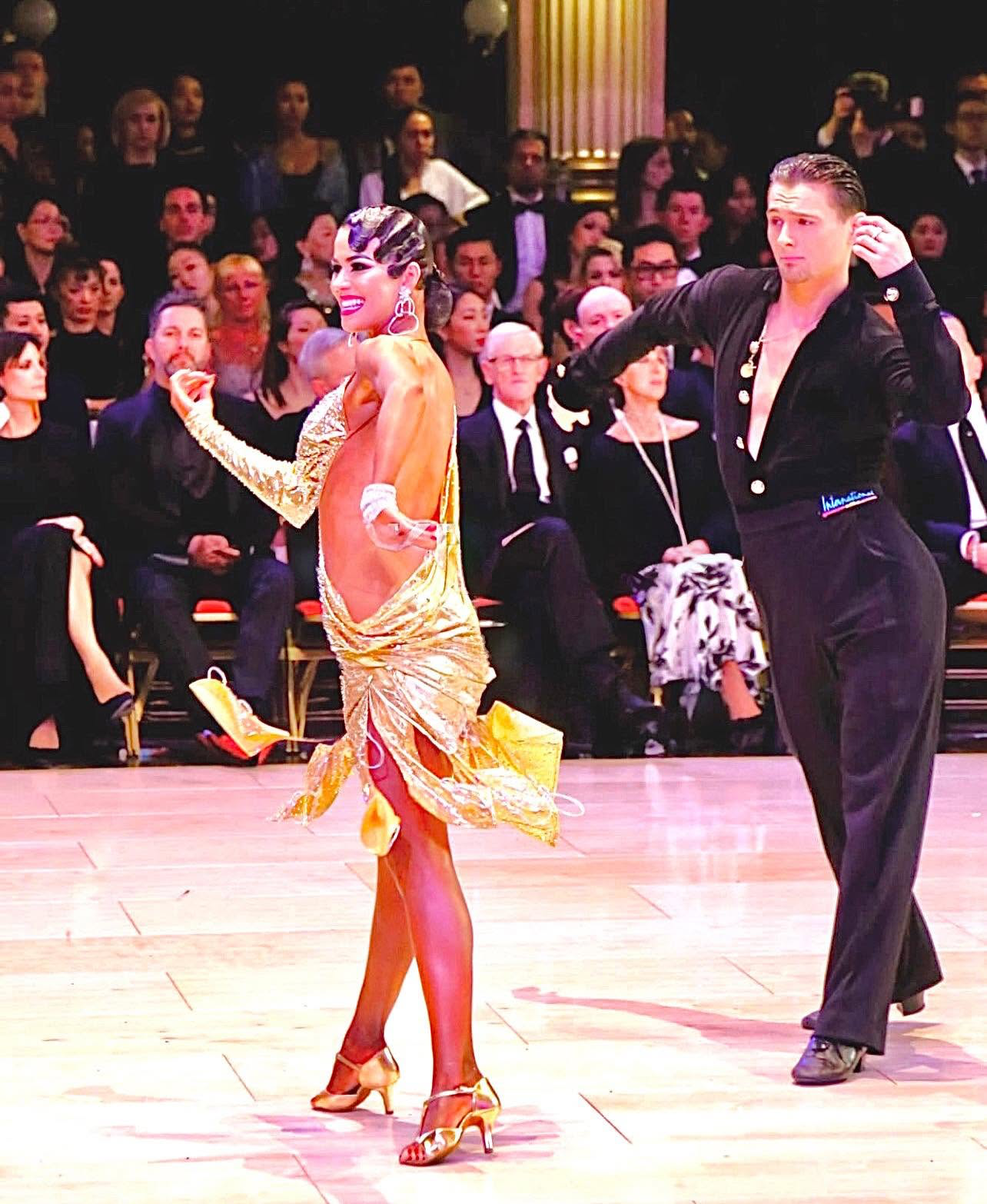
Two accomplished dancers do not automatically become a team. They may share a studio, a competition schedule, and an ambition, yet understand commitment, criticism, and even respect quite differently. As Holger opened the thirteenth season of masterclasses.dance, this was the question at the heart of the discussion: how does a partnership become a shared purpose?
Masterclass #37, “How to Become a Team: From Partnership to Shared Purpose,” brought Petar Daskalov and Zia James into conversation with Holger Nitsche, Jean Dorff, and the community. Speaking as active professionals, Petar and Zia described a partnership built through shared curiosity, difficult conversations, and years of discovering what works between two very different people. They were equally willing to acknowledge what remains unresolved.
Three threads from their discussion particularly resonate.
1. Shared Purpose: Finding Someone Who Wants to Keep Searching
For Petar, the first sign of a team appeared before the dancing itself. In Zia, he recognized someone whose commitment matched his own. That recognition brought relief: he no longer felt responsible for persuading another person to care as deeply about the work.
Zia recalled an early practice that made this connection tangible. They were preparing to finish for the evening when a fan position did not feel right. Each had a different understanding of how to dance it. They tried both versions, explored what each offered, and stayed another three hours.
The detail matters. Neither partner’s idea had to disappear before they could move forward. Their interest in the dancing gave them a reason to investigate together.
That same purpose helped them approach competition results. Petar explained that a good result might bring a few days of happiness, and a disappointing one a few days of frustration. Either way, they would return to the studio with work to do. The discussion also acknowledged how demanding this outlook can be for couples whose efforts receive little recognition. Loving the process does not remove disappointment; it gives dancers something to return to when disappointment arrives.
2. Communication, Difference, and the Responsibility of Partnership
Sharing a direction did not mean sharing the same instincts. Petar and Zia spoke openly about differences in upbringing and communication that repeatedly caused conflict.
One example was particularly revealing. Petar had learned that walking away from an argument could prevent someone from saying something damaging. Zia experienced the same action as disrespectful. Each believed their response made sense. Understanding the disagreement required them to examine the meaning behind the behaviour.
Their experience also changed the language they used in practice. Petar described learning to speak about a step, a timing, or a movement as something both partners could improve. This gave them a shared problem to investigate and reduced the sense that one person was being judged.
For Zia, communication carries a responsibility that follows from choosing a partner. It is in her interest to bring out the best in Petar, just as it is in his interest to bring out the best in her. A personal attack damages the partnership they both depend on.
They offered a practical example of this responsibility: waiting ten to fifteen minutes after a round before discussing problems. Some complaints lose their urgency during that pause. Those that remain can be considered with more care. Their account was candid, too: they still do not always succeed in keeping feedback from feeling personal.
3. Artistic Identity and the Freedom to Keep Learning
Asked what makes them recognizable as a couple, Petar and Zia hesitated. For teachers accustomed to helping dancers define their strengths and identity, their uncertainty opened an interesting discussion.
Petar worried that reducing their dancing to a formula might close the search that keeps him interested. Holger offered another perspective: understanding a couple’s identity can help them develop it more clearly. Both positions remained in the conversation, leaving educators with a useful question about when definition supports an artist and when it begins to restrict one.
Zia found it easier to describe how others saw them. Requests to teach musicality had prompted the couple to examine something they had developed without consciously setting out to acquire that label. She traced it to the relationship between timing, action, and connection between two people.
Their curiosity also had limits. Petar acknowledged that continued adjustment can damage something already working well. Learning involves recognizing when to experiment, when to seek advice, and when to leave a passage alone long enough to dance it.
Rigor and Vulnerability
Some of the most revealing moments concerned winning. Petar described looking at his dancing after achieving major titles and feeling that it fell short of his own imagined standard of a champion. Zia spoke about difficult periods behind successful results and about becoming more interested in the experiences dancing could offer.
Holger and other champions in the community recognized the emptiness that can follow a long-pursued goal. Their responses gave the discussion a wider significance for teachers: a result tells us little about how a couple is managing the experience of achieving it.
Questions about authenticity were equally searching. Petar and Zia prefer to bring themselves onto the floor rather than adopt a separate persona. Yet Petar also recalled performances that felt extraordinary and disappointed him on video. Personal expression still needs the discipline of examining what reaches an audience.
The session offered no settled method for becoming a team. It gave something educators can use: specific experiences to question, compare with their own, and carry into conversations with dancers.
For those invested in teaching, this is where the value of masterclasses.dance becomes tangible. Active competitors share the decisions and uncertainties behind their work; fellow professionals test those ideas against their own experience. The learning continues through reflection, discussion, and the next encounter in the studio.
For anyone working to strengthen a partnership, Petar and Zia’s masterclass offers a place to begin: with the purpose both people share, the differences they need to understand, and the care they bring to the work between them.
This article draws on the masterclass by Petar Daskalov and Zia James, WDO World Amateur Latin Champions and WDO European Amateur Latin Champions, who went on to place third at the 2025 WDO World Professional Latin Championship. Alongside their competitive careers, they teach, demonstrate, and share the experience of a partnership that continues to evolve. The series is hosted by Holger Nitsche, World Champion and internationally recognized dance educator, author, and lecturer, and Jean Dorff, teacher, coach, and author. Together they host every masterclass and lead the twice-monthly group coaching at masterclasses.dance, continuous professional development for serious dance educators.
Open Lesson
Experience one complete guided lesson
Below is one complete guided lesson from Petar and Zia’s MasterClass. Read the introduction, consider the opening question, watch the lesson, and use the deepening questions to explore how the idea relates to your own dancing, teaching, or partnership.
Season 13 · Part 1 · MasterClass #37
Honest Feedback Without Personal Attack
Chapter 2: Growing Together Under Pressure · Lesson 5
Introduction
Honesty matters to Petar and Zia, but they acknowledge that even after years together, feedback can still feel personal. Petar describes a practical shift: speaking about the step, timing, or movement as something they are both working on. Zia connects their trust to accepting each other’s differences.
OPENING QUESTION
What makes you able to hear difficult feedback from someone you work closely with?
Deepening Questions
1. Petar tries to discuss the dancing as a separate thing that both partners can improve. Take a critical comment you have heard in practice. How could you rephrase it to identify a shared problem clearly?
2. Zia says that they stopped trying to change each other. How would you distinguish accepting a partner’s personality from accepting behaviour that harms the working relationship?
3. The couple acknowledges that honest feedback can still hurt. What could partners do after a comment lands badly, even when the intention was to help?
4. Zia once imagined that top professionals had everything under control. How might that assumption affect younger dancers, and what could teachers do to make the difficulties of partnership easier to discuss?
Your answers are saved in this browser on this device.
You have just experienced one of ten guided lessons drawn from Petar and Zia’s complete MasterClass. Their teaching remains at the center, while the introductions and questions help members explore their insights more deeply and connect them to their own work.
Members can experience Petar and Zia’s MasterClass in two ways: watch the full MasterClass, or follow the curated ten-lesson experience, with introductions, opening questions, and deepening questions.
MasterClasses.Dance does not only preserve expert teaching. It gives members more than one way to work with it.
Watch the Full Masterclass