Season 11 · Technique as Expression · Featuring Massimo Giorgianni
LIVING CHARACTER OF LATIN DANCE: Massimo Giorgianni on the Meaning Behind Dance Skills
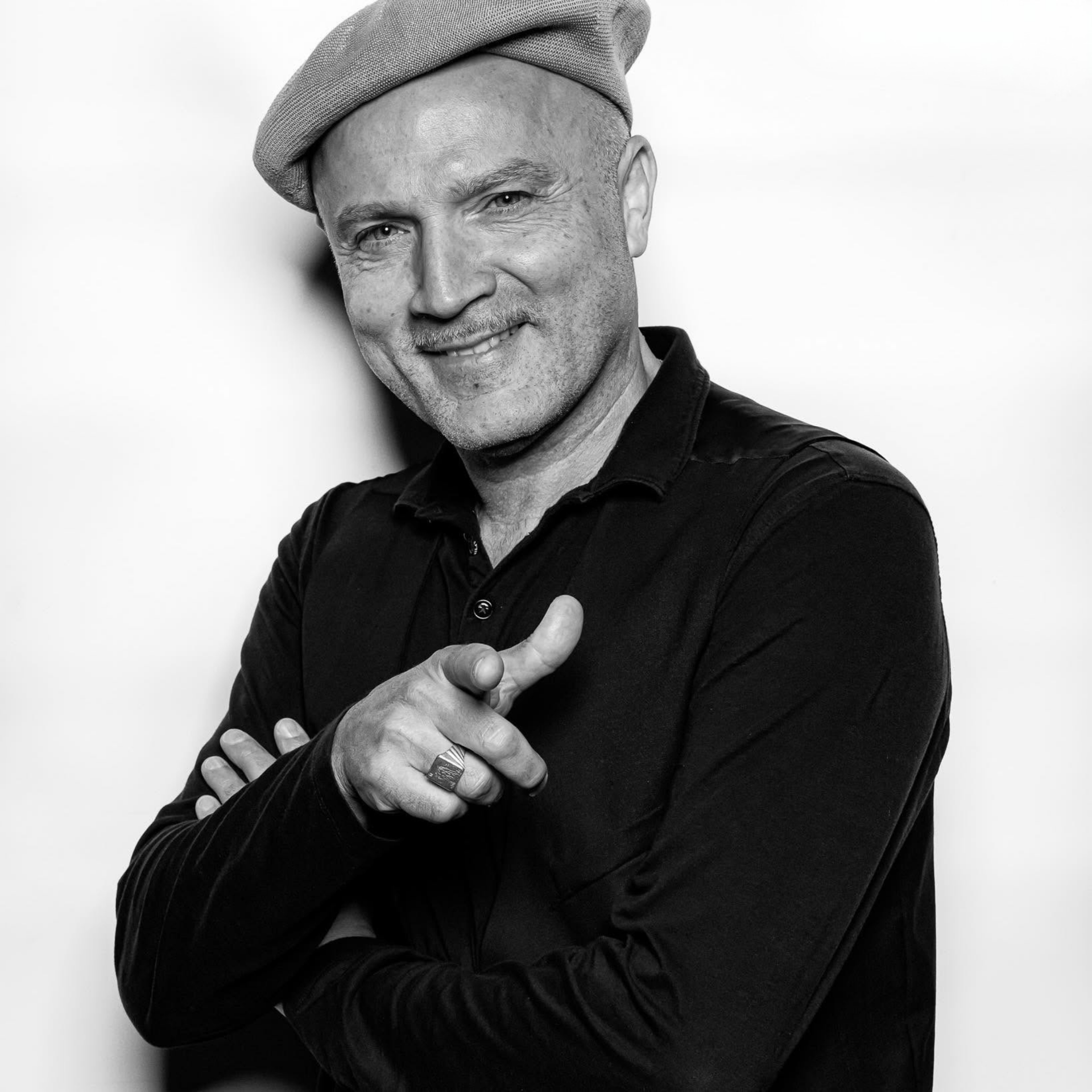
Dance educators often find themselves caught in the binary between technique and artistry, as if each lies at opposite ends of a spectrum, a world of “cold” mechanics and a world of “colorful” emotion, forever parallel but rarely connected. Massimo Giorgianni dismantles this split with a conviction forged in decades of top-level dancing, teaching, and self-reflection. For him, the movement vocabulary we devote years to refining is not a neutral act, it's already expressive, already art, already communication.
The common belief that technical skill “is not expressive, is not art” misses a central truth: physical technique is itself an act of communication. “For the body, dancing is communication,” Massimo states, insisting there is “no way not to communicate; we always communicate something.” Technique is not a sterile vehicle that awaits the layering of personality or intent. The very execution of a step, the quality of weight, duration, space, and time, already broadcasts meaning. The human body cannot avoid expressing, even at its most mechanical, it is transmitting intent, quality, and energy.
This is not to say technique alone suffices; rather, it is a substrate for expression, a field on which meaning is sown. Massimo recounts the influence of his teachers, especially the emotionally charged lessons of Doreen Freeman, as formative in understanding that technique and passion can be fused in the act of teaching. He proposes that even the names of steps, such as “feather step” or “natural turn,” are latent with expressive potential. Far from trivial, inviting students to discover or invent their own interpretations of these names prompts them to relate to movement as lived, meaningful action, a subtle but powerful way to foster expressive depth.
The Body-Mind Loop
There is a risk, Massimo concedes, in presenting the body solely as a machine or teaching movement as an accumulation of gestures. When the emotional dimension is left out, dancers and students struggle to internalize meaning. However, the converse is also true; how we move directly shapes our emotional state. “The quality of your movement will reflect the quality of your thinking, of your behavior, of your state of mind.” Instead of perpetuating the body-mind divide, Giorgianni advocates a continual loop where body and feeling are inseparable, both fueling and being fueled by each other.
From Imitator to Creator
A persistent question for educators, then, is how to guide students from mere imitation to genuine creation. Massimo describes his mission “to move dancers from imitators to creators.” Imitation, he insists, is not inherently wrong, it is a natural and necessary stage. But at a certain point, the journey must become one of asking “different questions in order to become a creator.” Only when a dancer knows the reason behind their choices, the “why” of movement as well as the “what” and “how”, do they begin to decide on their own measures, to season their dancing deliberately and tastefully, as a chef might balance ingredients in a signature dish.
To illustrate the transition from imitation to creation, Massimo offers a metaphor from the world of food: the difference between following a recipe and inventing a new variation that suits one's own taste and character. The seasoned chef does not simply alter for the sake of difference but adjusts quantities, timing, and seasoning with intention rooted in knowledge. The dancer, too, must progress from perfecting the basic skill (“the spaghetti”) to understanding how and why to modify, combine, or highlight aspects of their performance (“the sauce” and its precise balance). Creativity emerges not from excessive novelty but from mastery of basics and a sensitive, personal approach to their deployment.
Personality, Character, and the Teacher's Calibration
Even so, Massimo resists the idea that creativity is reserved for the advanced alone. He notes that character can be seen in dancers even from childhood; the educator's challenge is not to suppress that essence but to encourage it, cultivating personality without obscuring innate character. “Personality is what we imitate…character is more inside you, who instinctively you are.” While personality can be learned, character must be uncovered and grown, a lifelong search rather than a single accomplishment.
Teaching thus becomes a constant act of calibration: challenging students with technical demands, asking them to fail and experiment, but also guiding them to attach the right kind of value to their lessons, understanding technique as a path to self-expression, not simply as an end. “Celebrate when things go wrong … learn from what doesn't go good.” An overemphasis on perfection can stifle expressiveness, as the quest for accuracy sometimes robs movement of its humanity. In Massimo's vision, the role of the teacher is to help students separate identity from skill, encouraging growth not only in craft but in self-knowledge and resilience.
Ultimately, technique and expression are not separate domains to be balanced, but integrated threads, each giving meaning to the other. For Massimo, the educator's deepest task is to create an environment where dancers realize that every movement, from the most basic walk to the most complex choreography, is already a form of personal communication, one that deepens as skill, awareness, and character develop.
If every technical lesson is already an expressive act, then the real question becomes: what, as teachers and dancers, do we most want our students to say with their bodies, and how do we guide them in discovering that for themselves?
This article draws on the masterclass by Massimo Giorgianni, who, with Alessia Manfredini, amassed 8 World Championship titles across Standard and Professional Showdance, including 6 consecutive World Showdance crowns and 2 World Amateur Ballroom titles, taught for masterclasses.dance. The series is hosted by Holger Nitsche, World Champion, author, lecturer, and internationally recognized dance educator, and Jean Dorff, dance educator, coach, and author. Together they host every masterclass and lead the twice-monthly group coaching at masterclasses.dance, continuous professional development for serious dance educators.
Watch the Full Masterclass